

Why Pottery Is One of the Best Places to Learn How to Fail
Fail in ceramics—often. Trust me.
I fail at ceramics constantly. And I keep showing up. Here’s why.
Growing up, I had a complicated relationship with failure. High expectations made it hard to make mistakes, and when I did, shame would consume me. I did what I had to do to “succeed” – get good grades, get into the right schools, and be perceived as capable and likable.
Then my parents went through a difficult divorce. My home life felt like it was falling apart, and I did everything I could to hold it together. I had to stay perfect. I had to stay “good.”
Why are so many people afraid to fail?
Why We Fear Failure
From my experience as an educator, I see two main reasons students fear failure:
They haven’t practiced it. People rarely have the chance to fail in safe, constructive ways.
Their past failures weren’t supported. When mistakes are met with shame rather than guidance, we learn that failing means we are “bad.” That’s what I learned, anyway.
Neither of these lessons is true—but they stick. The result? Anxiety, avoidance, and a fear of trying new things.
Finding Freedom in Clay
What I needed most as a teenager was guidance in navigating failure. I found that in the pottery studio.
Even before the divorce, clay had been part of my life. But in high school, the studio became my refuge. My instructor recognized my need to explore, fumble, and create without judgment. He gave me challenges, trusted me with responsibilities, and even handed me a key to the studio. Weeknights were often spent there, learning lessons I didn’t know I needed.
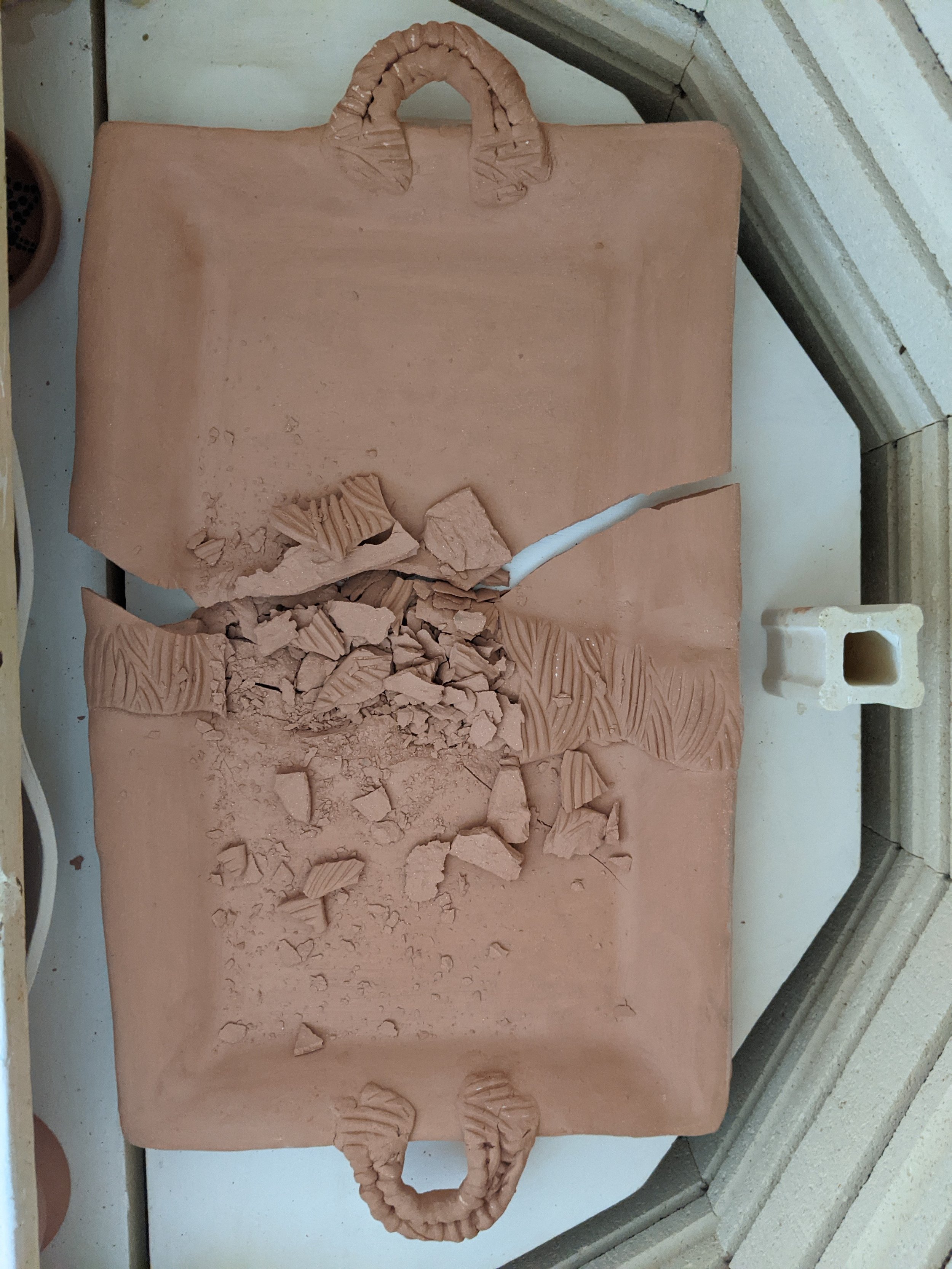
The most important lesson pottery taught me: you will make mistakes. You will fail. And that’s okay.
You can fail and start over.
You can pivot when things don’t go as planned.
You can take risks, experiment, and learn.
Failure doesn’t have to mean shame. And, in the right context, it can be profoundly liberating.
Why Failing is Actually Good for You
Scientific research backs this up:
Learning from mistakes strengthens the brain. “The Biological Benefits of Failure on Learning and Tools to Manage the Fallout” (Educational Psychology Review) explains that mistakes enhance memory and understanding, helping the brain form new connections.
Context matters. Too much stress from failure can hinder learning, but failure in a supportive environment—where struggle is expected—builds resilience. Pottery is exactly this kind of environment.
I’ve been working with clay since 1998. I fail constantly, and I’m grateful for it. Failure is how I learn, adapt, and grow.
Growth Mindset: How Context Shapes Our Beliefs About Failure
Research also shows that the way adults respond to failure shapes how children—and even other adults—approach mistakes:
Growth mindset: Viewing failure as an opportunity to learn promotes resilience and curiosity.
Fixed mindset: Viewing mistakes as proof of inability leads to fear and frustration.
In pottery, a supportive instructor, or even self-compassion, helps cultivate a growth mindset. You learn that failure is information, not judgment.
Lessons from My Own Pottery Fails
Pottery teaches practical ways to embrace failure:
Mistakes as lessons: Early on, I opened a kiln too soon and shattered almost everything. I breathed, cleaned up, logged the lesson, and tried again.
Failure can lead to surprises: A collapsed bowl turned into a new series of large wavy bowls. I discuss my process making them here.
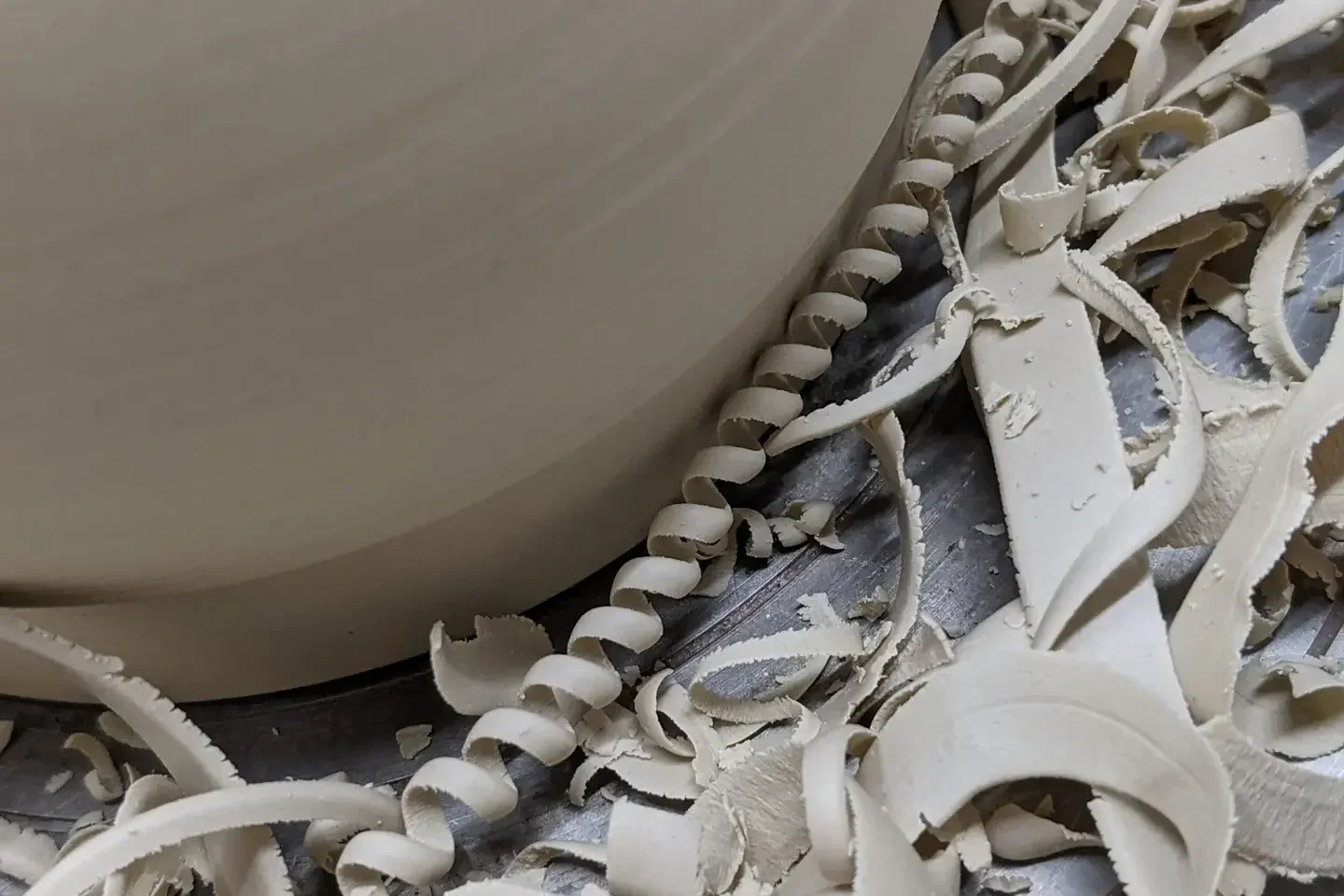
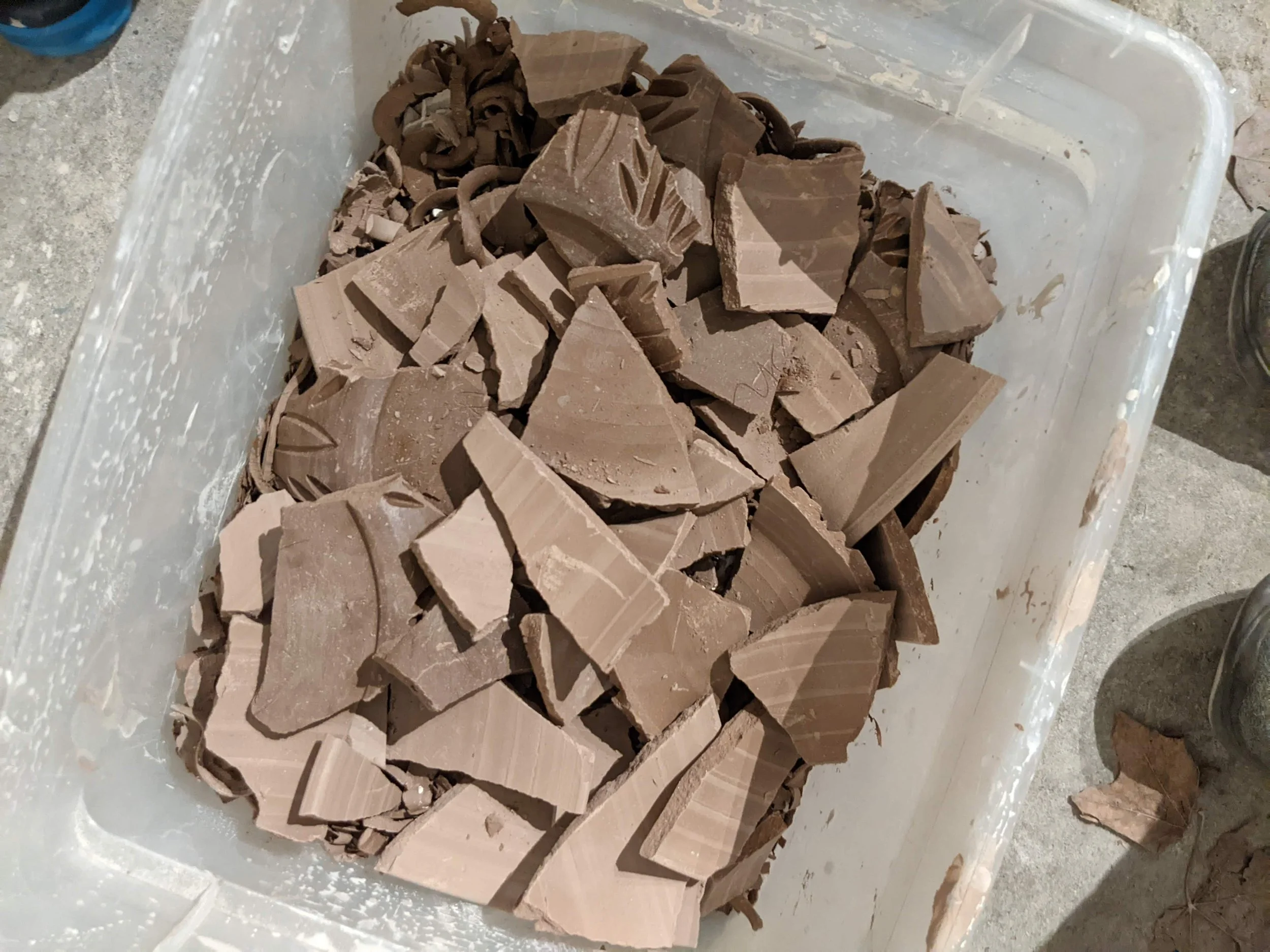
Starting over is okay: Unevenly dried mugs taught me to pay attention to drying conditions, and I recycled and restarted.
Adaptability matters: Weather, clay readiness, glaze consistency—even the cat—force us to adjust and problem-solve on the spot.
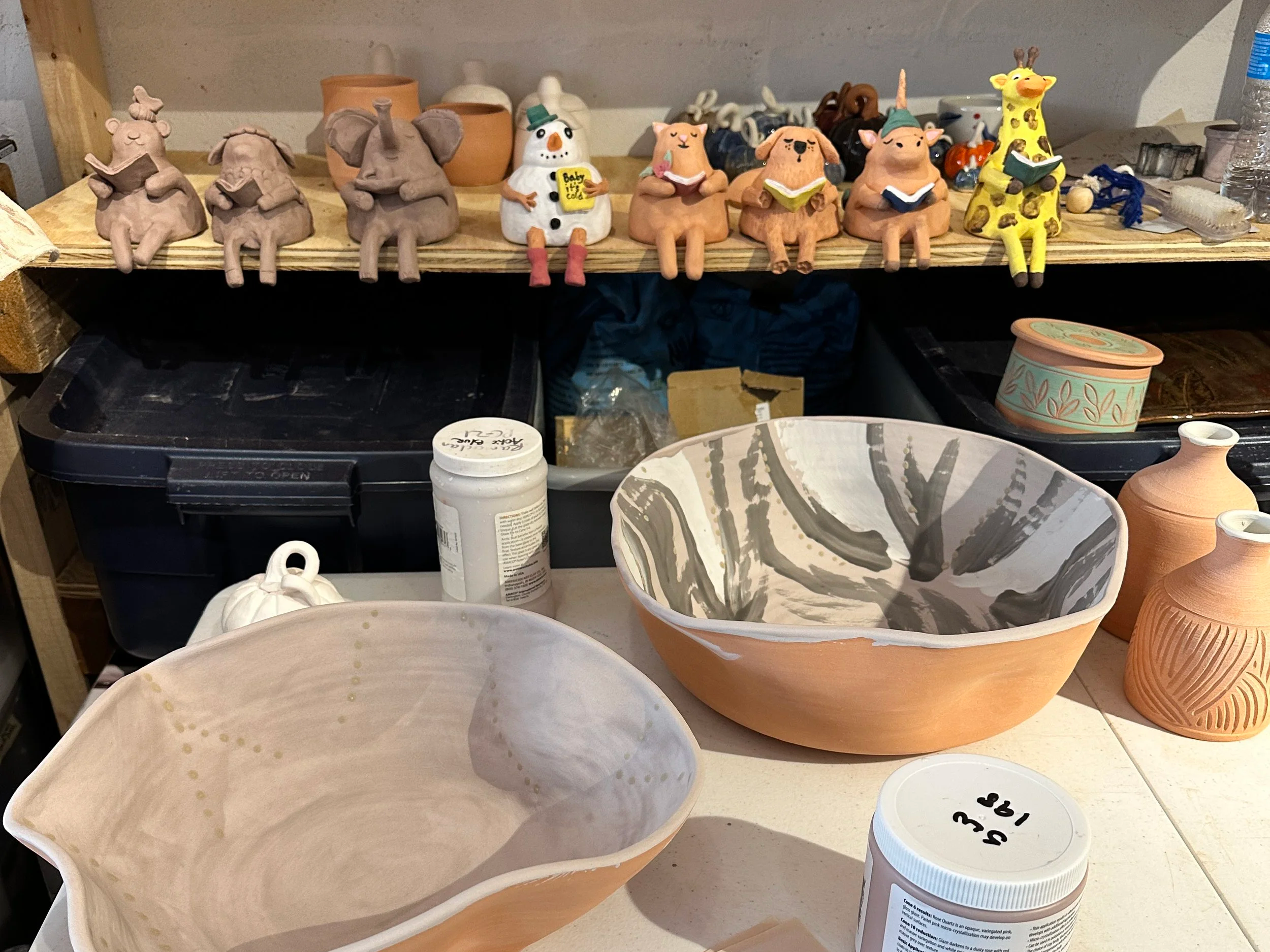
In a nourishing pottery studio, the stakes are low, the environment is supportive, and failure is expected.
This is the perfect place to practice risk-taking and creativity.
Why You Should Take a Pottery Class
If you struggle with failure, starting over, or adapting to things going wrong, pottery is a safe and effective way to practice.
Take it from one of my pottery students who sent me this note a few months ago:
I have a major, epic, the world-is-falling-apart budget revision due.
I worked all last week on it and over the weekend, and yesterday at a check-in learned my entire approach wasn't wrong ‘philosophically,’ but it was entirely not eligible for the changes I was planning to make.
So last night I get home and I told my spouse about my budget meeting and how it just fell apart as I was working it into place.
He was like, “How are you not flipping out??”
I said, “Well, its like when you decide you’re going to attempt to throw 4 pounds of clay and you put all your strength into centering it perfectly and you open it well and start to move it but then you hit one snag, and while you HOPE it can be fixed what it actually does is collapse in your hands and you just have to wipe off the wheel and start over, despite being proud you got to the part where you centered 4 lbs of clay.”
He had a really blank stare for a minute, then said, “Ok, so you're doing... budget pottery...”Yes, yes I am.
My first throw fell apart when the walls got too thin and now I have to pound a whole other ball of clay into hopefully something that stands up better next time.
So thanks for helping me “not flip out” at the fact that I have to start alllllll the way the over on this frustrating project !
TL/DR? Pottery teaches you:
How mistakes are lessons
How to adapt when things don’t go as planned
How to take creative risks without fear
Trust me: Creativity flourishes when we are free from perfection.
Pottery gives you that freedom.
