

Potter to Potter: Sgraffito Pottery Process with Proudly Krafted
About the Potter to Potter Series
Welcome to the Potter to Potter Series, a series of blog posts where hobby and/or professional potters discuss their favorite techniques and shed some clay wisdom in the spirit of sharing and community.
Meet the Artist: Corey Kraft of Proudly Krafted
As much as possible, the Potter to Potter Series will feature LGBTQI+ potters and potters of color.
For this inaugural post, we are delving into sgraffito with Corey Kraft, the maker behind Proudly Krafted, and the creator of an upcoming YouTube series documenting finding artistic voice while their voice is changing through transition on testosterone.
Animals, Joy, and Queer Storytelling in Clay
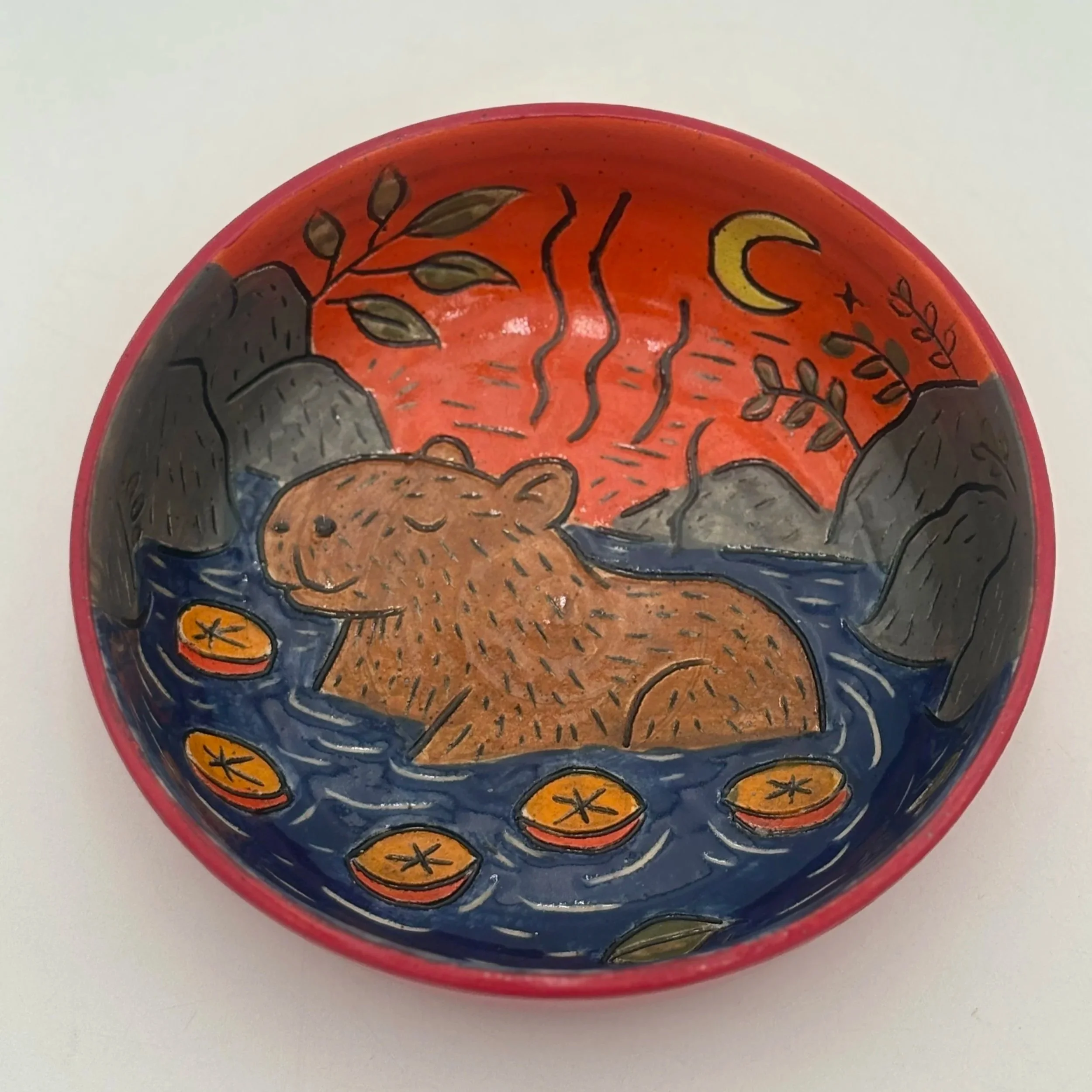
I came across Corey’s work on Instagram when I saw a set of adorable capybara bowls that just made me smile.
Just have a look at Corey’s pottery gallery, and you can see how their work often centers on animals who are, in the words of the artist themself, “sometimes cute, sometimes mischievous, often unapologetically queer.”
If this description appeals to you, give Corey a follow on Instagram!
About their body of work, Corey shares, “I’m drawn to imagery that celebrates joy and intimacy, like two frogs holding hands or a planter wrapped in a full-on rainbow. Pride isn’t an afterthought in my work; it’s baked right into the clay.”
Corey Kraft’s Sgraffito Pottery Process
Much of Corey’s work also involves the process of sgraffito, a pottery technique where a design is carved through a surface layer to reveal the clay beneath (Read more about sgraffito and other techniques here).
Designing Sgraffito Patterns Digitally
Corey’s sgraffito process is planned and intentional. Most of Corey’s designs begin on the computer, where they research and sketch ideas, drawing inspiration from linocut artists. “Their bold lines, high contrast, and narrative simplicity heavily influence my visual language,” says Corey, “Once I land on a design, I print it out and bring it into the studio.”
Transferring Designs onto Clay
Depending on the piece, whether the surface is left bare or prepped with some coats of underglazed, the next step involves tracing the printed design directly onto the piece with a rounded pencil or pen, which leaves a shallow shadow mark on the clay.
Layering Underglaze for Multicolor Sgraffito
For multicolor pieces, like these capybara bowls, Corey uses the traced design as a guide, painting in sections with three to four coats of underglaze, depending on the brand and the color saturation desired.
Pro Tip: Using Cornstarch to Reveal Traced Designs
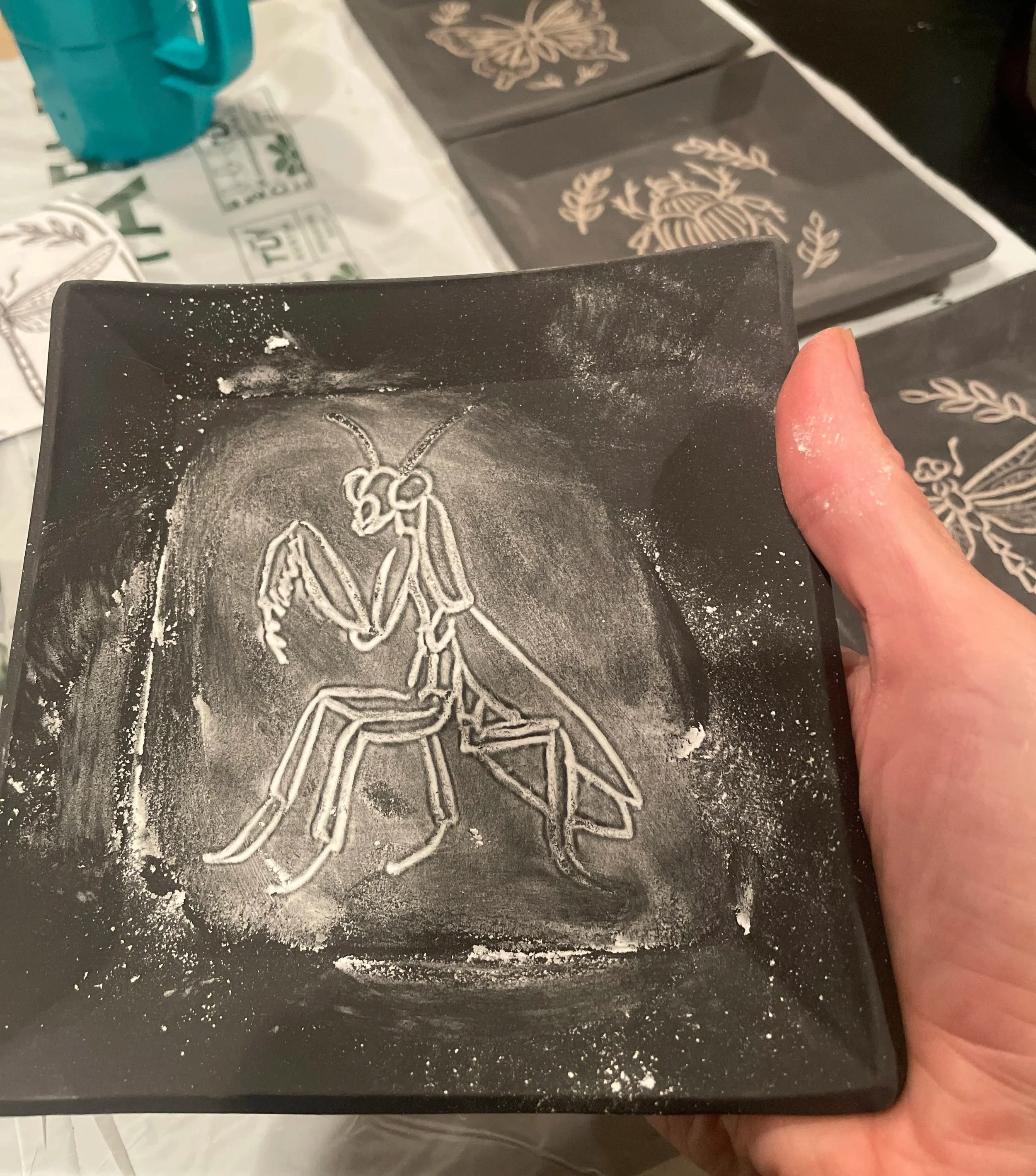
Before beginning the sgraffito process of carving out the traced lines, Corey’s got a pro tip:
“Use cornstarch to help bring out traced designs before carving. This makes the imagery easier to read and refine.”
Essentially, once a design is traced, to see the design more clearly before carving it out, Corey puts some cornstarch into a sock and gently dabs it onto the piece.
The cornstarch makes the tracings easier to see, and therefore easier to carve later on.
Sgraffito Carving Tools and Techniques
Once the surface is ready, Corey then carves into the underglaze using various sgraffito tools like the xiem small wire tools (also available here) and the p12 Diamond Core sgraffito tool. Corey also sometimes uses a mechanical pencil for really fine lines.
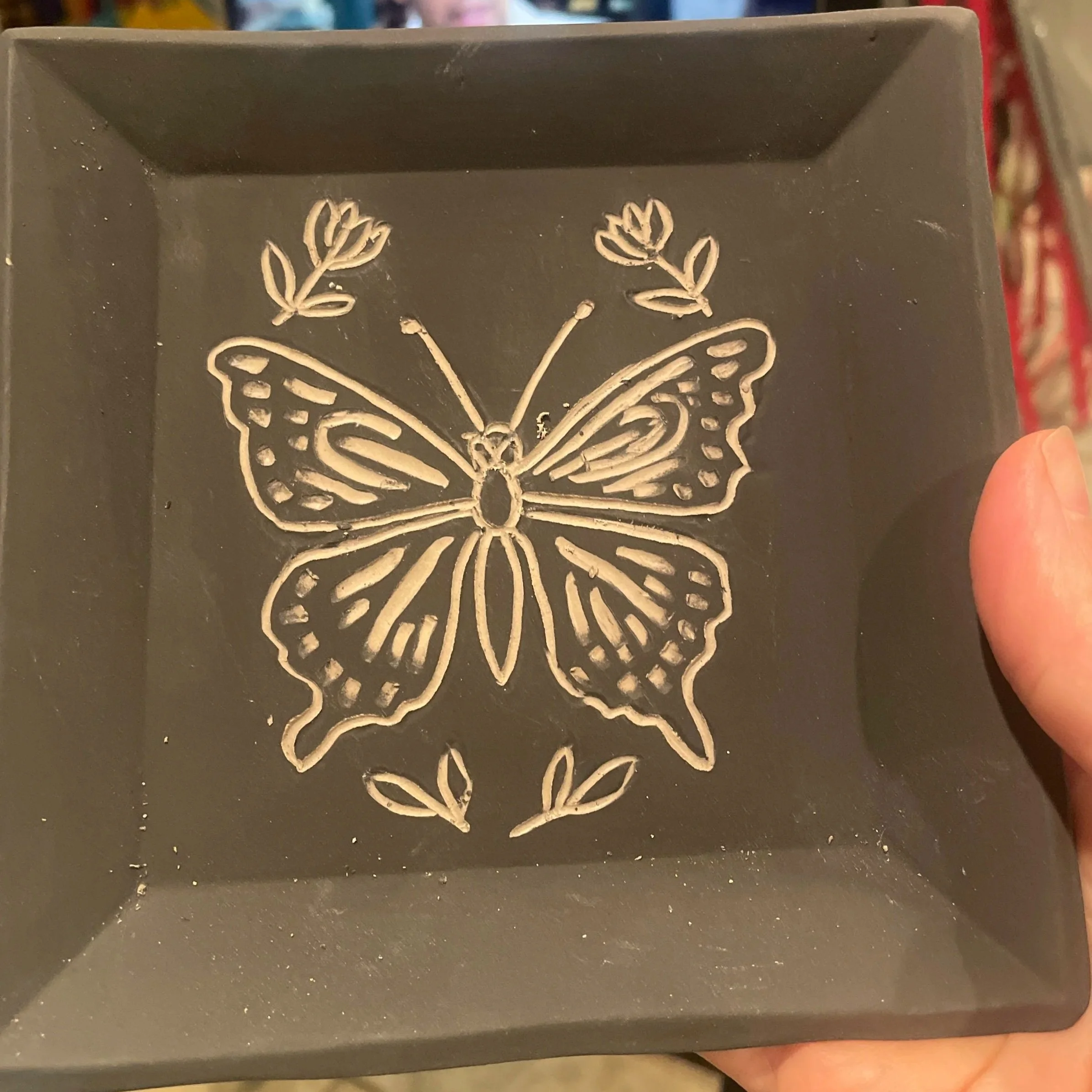
“Right now, I’m intentionally experimenting and observing how different tools create different marks and textures,” says Corey, “That variation in line quality is a huge part of the process for me. Occasionally, I’ll paint small details back over the carved areas, then clean up and refine the surface before bisque firing.”
Finishing Techniques After Bisque Firing
After the bisque firing, Corey often applies a watered down black underglaze onto the piece and wipes it back, as seen on this video. For Corey, this process “leaving black pigment in the carved lines is especially effective on white clay bodies. It adds depth, contrast, and a slightly weathered, story-worn feel to the piece.”
Clay Bodies for Sgraffito: Porcelain vs. Stoneware
In terms of clay bodies, currently, Corey has also been experimenting with porcelain instead of stoneware. They share, “The clay body dramatically changes the quality of the carved lines—porcelain allows for sharper, more delicate detail. In the future, I’m excited to explore sgraffito on darker clay bodies to see how the contrast and mood shift.”
Explore Corey Kraft’s Work
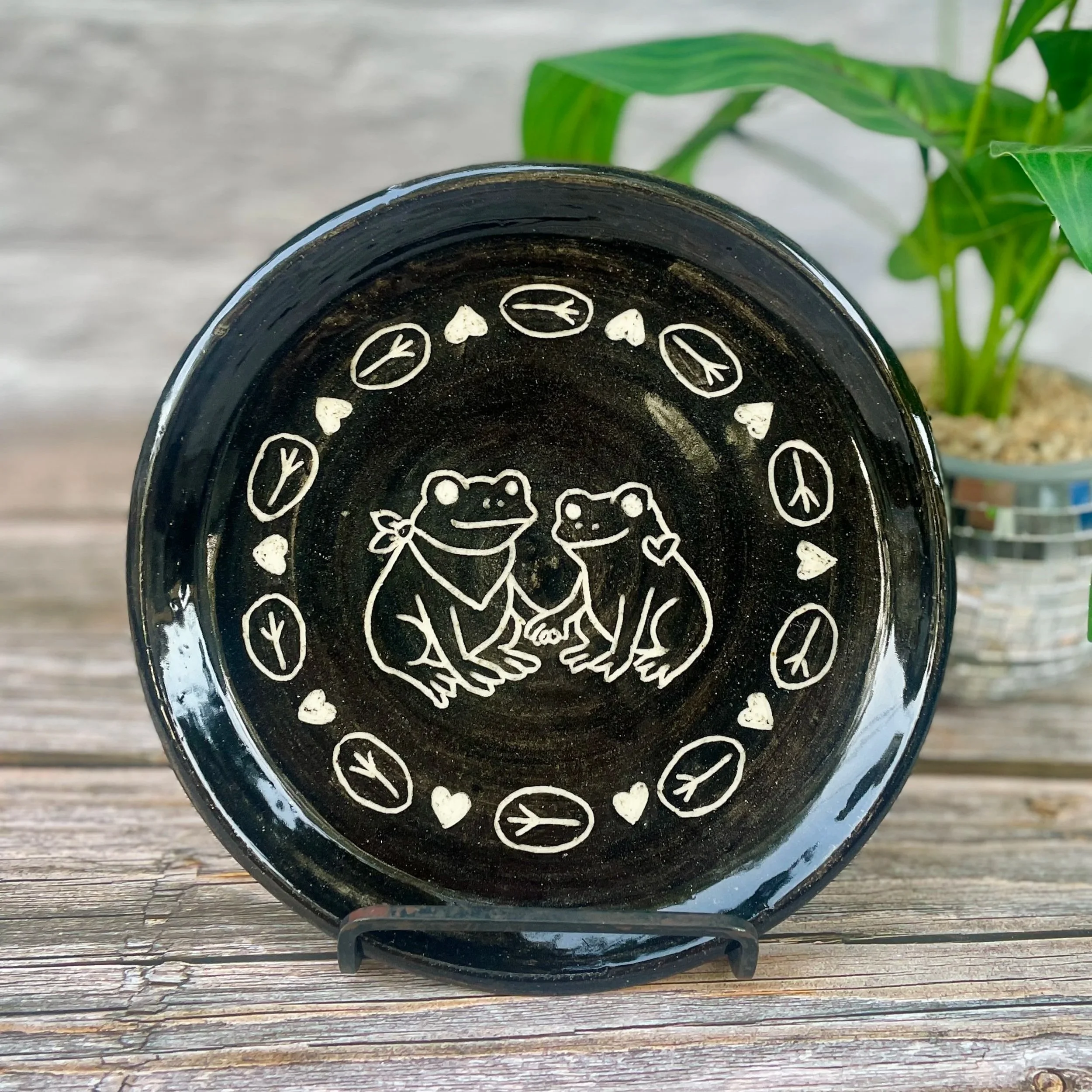
At its core, Corey describes their sgraffito process as a practice in “patience, observation, and storytelling—using line, color, and texture to celebrate queerness, nature, and the quiet intimacy found in small, hand-made moments.”
Check out Corey’s gallery of work at www.proudlykrafted.com.
You can follow Corey on Instagram and other socials @proudlykrafted.
Interested in ordering a piece from Corey? They accept custom order requests!
This post was written by Meesh Pottery in collaboration with Corey Kraft.
As an Utrecht, Blick, and Amazon associate, Meesh Pottery earns from qualifying purchases. As an independent artist, every bit of support counts! Meesh Pottery also donates 10% of profits to non-profits that serve BIPOC and LGBTQ+ communities in need. Learn more.
